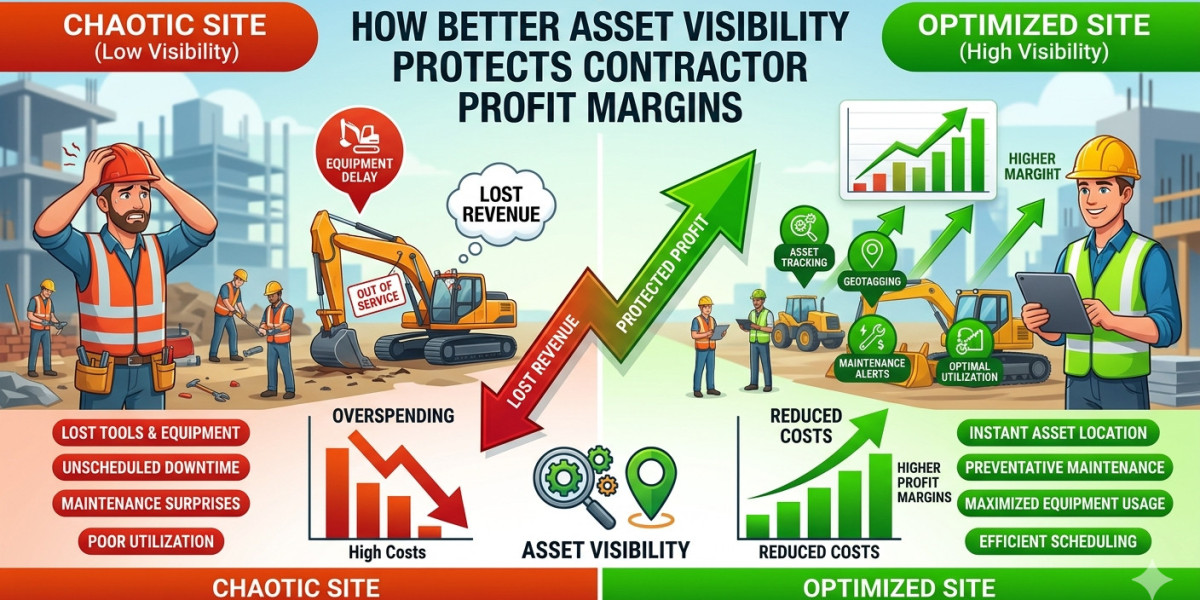

Contractors do not lose money only when a machine breaks down. They also lose money when tools disappear, trailers sit unused, attachments move without records, and field teams cannot confirm where assets are or who used them last. That is why construction asset tracking software has become a practical tool for contractors who want better control over jobsites, equipment, tools, and profit margins.
In construction, every asset has a cost. Some assets are obvious, such as excavators, loaders, cranes, trucks, compactors, and trailers. Others are easier to overlook, such as attachments, generators, lasers, pumps, plates, handheld tools, safety equipment, and temporary jobsite assets. When these items are not tracked properly, the business starts paying for replacements, rentals, delays, duplicate purchases, and preventable downtime.
Better asset visibility is not about watching everything for the sake of watching. It is about knowing what the company owns, where it is, who has it, how it is being used, and whether it is helping the job make money.
Why Asset Visibility Matters in Construction
Construction assets move constantly. A tool may start in the shop, move to a truck, get used on one jobsite, then end up at another site without anyone updating the record. A trailer may be assigned to one crew, borrowed by another, then left in a yard for weeks. Attachments may be separated from machines. Small tools may be replaced because no one knows where the original ones went.
This creates a simple problem: contractors keep paying for assets they already own.
Poor asset visibility leads to:
Duplicate tool purchases
Unnecessary rentals
Lost or stolen equipment
Delayed work
Weak job costing
Poor accountability
More time spent searching
Lower field productivity
Disconnected records
Higher replacement costs
These losses may look small individually, but they add up across crews, jobsites, and months of work.
The Hidden Cost of Missing Assets
When a tool or attachment goes missing, the replacement cost is only the first problem. The bigger issue is often lost production.
If a crew cannot find the right compactor, saw, pump, or attachment, work slows down. Someone has to search the yard, call another foreman, check trucks, or request a replacement. If the item is not found quickly, the team may rent or buy another one just to keep the job moving.
This creates hidden costs such as:
Lost labor hours
Rush purchases
Last-minute rentals
Delayed tasks
Extra delivery charges
Duplicate inventory
Frustrated field teams
For contractors with multiple active projects, this becomes a serious margin issue. The company may appear busy, but money is leaking through poor asset control.
What Construction Asset Tracking Software Actually Does
Construction asset tracking software gives contractors a centralized system for managing tools, machines, trailers, attachments, and other field assets.
A good system helps teams track:
Asset name and ID
Category and type
Serial number
Assigned jobsite
Assigned employee or crew
Check-in and check-out status
Last known location
Inspection or service status
Photos and notes
Purchase or replacement cost
Usage history
This creates a reliable record that office teams, field teams, equipment managers, and supervisors can use.
Instead of asking, “Does anyone know where this is?” teams can check the system. That one change saves time and reduces confusion.
Why Spreadsheets Fail When Assets Start Moving
Spreadsheets can work when a contractor has a small number of assets in one location. They fail when assets move daily across jobsites, trucks, crews, yards, and vendors.
The issue is not that spreadsheets are useless. The issue is that they depend on manual updates. If someone forgets to update the sheet, the data becomes stale. Once the data is stale, people stop trusting it. Once people stop trusting it, they go back to phone calls and guesswork.
A live asset tracking system works better because it is built around movement. Field teams can update status from mobile devices. Managers can see assignments. Asset history is preserved. Photos, notes, and inspection results can stay attached to the record.
Better Asset Visibility Improves Accountability
Asset tracking is not only about finding items. It also helps establish accountability.
When assets are checked out to a person, crew, truck, or jobsite, everyone understands responsibility more clearly. This reduces confusion when something is damaged, missing, overdue, or left behind.
Accountability improves because teams can see:
Who had the asset last
Where it was last assigned
When it moved
Whether it was returned
Whether damage was reported
Whether inspection notes were submitted
This does not need to feel like micromanagement. For good field teams, clear records protect them. If a tool was already damaged before it reached a crew, the history can show that. If an item was returned properly, the record can show that too.
Asset Tracking Helps Reduce Theft and Loss
Construction sites are vulnerable to theft because tools, machines, trailers, fuel, materials, and attachments often sit in open or temporary environments. Assets may be moved by employees, subcontractors, vendors, or unauthorized visitors. Without tracking, it can be difficult to know whether something was stolen, misplaced, borrowed, or never returned.
Construction asset tracking software can support theft prevention by giving teams better records and faster visibility. Depending on the asset type, contractors may use GPS devices, QR codes, barcodes, RFID tags, geofences, photo records, or mobile check-in workflows.
For high-value equipment and trailers, GPS and geofencing can help detect unauthorized movement. For tools and smaller assets, barcode or QR code scanning can create a clear chain of custody.
How Asset Visibility Protects Profit Margins
Profit protection comes from reducing waste. Asset tracking helps contractors reduce the small daily losses that hurt margins over time.
Better visibility can help contractors:
Buy fewer duplicate tools
Reduce unnecessary rentals
Recover missing assets faster
Improve jobsite planning
Assign assets more accurately
Reduce downtime caused by missing tools
Improve equipment and tool utilization
Track asset condition before and after use
Strengthen accountability across crews
Make better replacement decisions
This turns asset tracking into a financial tool, not just an inventory tool.
For example, if a contractor sees that one jobsite has unused attachments while another jobsite is renting similar attachments, the company can redeploy owned assets and avoid rental costs. If a tool keeps disappearing from one crew or truck, managers can investigate the workflow. If certain assets are constantly in demand, leadership can decide whether buying more makes sense.
What Contractors Should Track First
Contractors do not need to track everything on day one. The best approach is to start with high-value and high-loss items.
Start with:
Heavy equipment
Trailers
Attachments
Generators
Pumps
Surveying equipment
Power tools
Specialty tools
Safety equipment
Rental assets
High-cost jobsite assets
Then expand as the process becomes easier.
The key is to create a consistent asset record. Every asset should have a unique ID, category, location, responsible person or crew, condition status, and movement history.
Platforms such as Clue help contractors connect asset visibility with equipment records, maintenance, inspections, tracking, and jobsite operations, giving teams one place to manage what they own and where it is being used.
Final Thoughts
Contractors work with tight schedules, expensive equipment and moving jobsites. In that environment, poor asset visibility becomes a profit problem fast.
Construction asset tracking software helps contractors know what they own, where it is, who has it, and whether it is being used properly. It reduces duplicate purchases, unnecessary rentals, missing tools, and field confusion.
Better asset visibility does not just make operations cleaner. It protects margins by helping contractors stop paying for the same problems again and again.