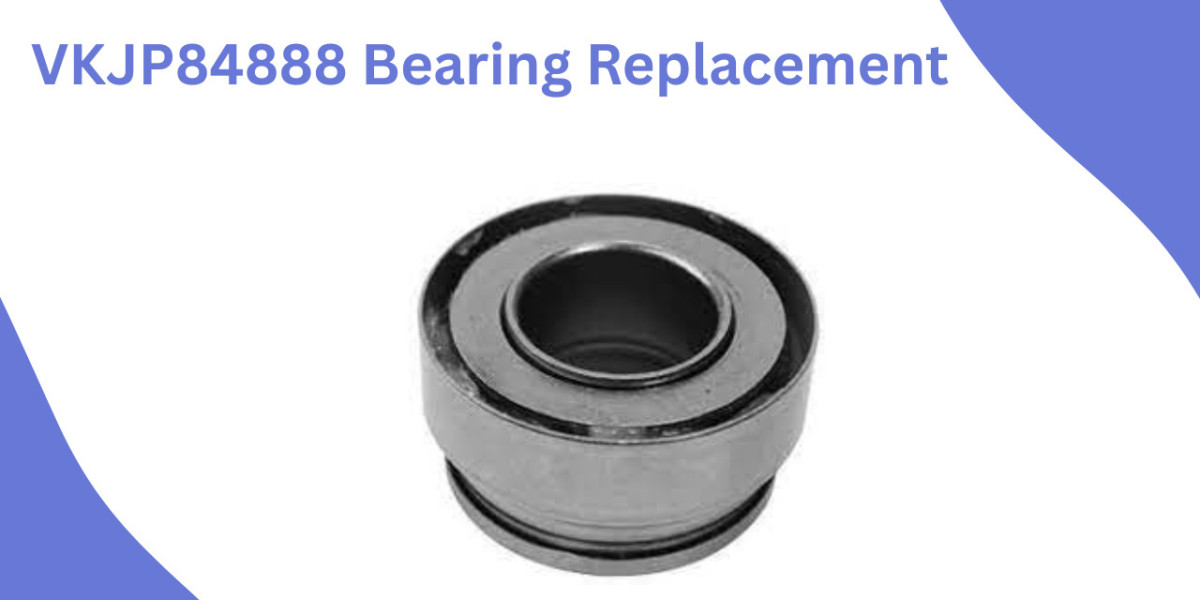

For fleet operators and industrial maintenance supervisors, a torn CV boot is never "just a minor leak." It is the precursor to a catastrophic drivetrain failure. Once the protective seal of a bellows kit is compromised, centrifugal force flings the essential lubrication out while road grit, moisture, and chemical contaminants migrate in. This abrasive "slurry" destroys the precision-machined surfaces of the Constant Velocity (CV) joint in a matter of miles. The VKJP 84888 is engineered specifically to address the high-stress demands of modern B2B logistics and heavy-duty transport, where standard aftermarket boots frequently fail.
The Problem: Why Standard Bellows Kits Fail
In commercial applications, the "one-size-fits-all" approach to drivetrain maintenance is a primary cause of unscheduled downtime. Most generic boots are manufactured from low-grade neoprene that becomes brittle when exposed to the extreme thermal cycling of heavy-duty operation. Furthermore, standard kits often lack the specific clamping force required to maintain a vacuum seal during high-angle articulation.
The VKJP 84888 addresses these vulnerabilities through material science. Unlike standard rubber, this kit utilizes advanced thermoplastic elastomers (TPE). TPE offers the elasticity of rubber with the chemical resistance of plastic, ensuring that the boot remains flexible at sub-zero temperatures while resisting the "ballooning" effect at high speeds—a common failure point in long-haul transport vehicles.
The Technical Solution: The VKJP 84888 Advantage
To provide a feasible solution for professional workshops, the VKJP 84888 is designed as a comprehensive system, not just a rubber sleeve. When a technician identifies grease splatter on the inner wheel well, the mechanical integrity of the joint is already at risk. The VKJP 84888 kit provides a strategic "reset" for the drivetrain component.
1. Optimized Geometry and Rib Design The bellows are designed with specific convolutions that distribute stress evenly during steering maneuvers. This prevents "rib-rub," where the folds of the boot grate against each other, leading to friction-induced holes. In industrial environments where vehicles undergo thousands of lock-to-lock turns daily, this structural integrity is vital.
2. High-Pressure Lithium Grease Lubrication is the lifeblood of the CV joint. NMR Bearing ensures that the grease included in these kits is formulated for high-pressure (EP) environments. This specialized molybdenum disulphide (MoS2) grease maintains a protective film even under the intense shearing forces found in high-torque B2B vehicle applications.
3. Precision Ear-Type Clamps A bellows kit is only as good as its seal. The VKJP 84888 includes stainless steel, low-profile ear clamps. These provide uniform 360-degree compression, preventing the "clamping gap" that allows water ingress—the silent killer of CV bearings.
Installation Best Practices for 2026 Reliability Standards
Providing value in a B2B context means ensuring the part lasts its entire service life. Following 2026 E-E-A-T (Experience, Expertise, Authoritativeness, and Trustworthiness) guidelines, technical accuracy during installation is paramount.
Decontamination: Before installing the VKJP 84888, the CV joint must be completely degreased and inspected for pitting. If any "clicking" was heard during operation, the kit cannot save the joint; the entire axle must be assessed.
Air Pressure Equalization: A common mistake is "trapping" air inside the boot during installation. This causes the boot to expand like a balloon when the grease heats up. Professionals use a small probe to vent the boot before final clamping, ensuring a neutral pressure state.
Torque Accuracy: Using pneumatic tools to tighten CV clamps is a risk. Manual, calibrated clamping tools ensure the TPE material is not sliced by the metal band, a frequent cause of "new part failure."
Economic Impact: Reducing Total Cost of Ownership (TCO)
For a business, the cost of a VKJP 84888 is negligible compared to the cost of a stranded vehicle or a full axle replacement. By standardizing on high-durability kits, maintenance departments can shift from reactive repairs to predictive intervals.
The TPE material used in the VKJP 84888 has a projected service life significantly higher than traditional rubber. In fleet testing, vehicles equipped with these thermoplastic solutions showed a 40% reduction in secondary joint damage caused by boot failure. This reliability translates directly to higher "Up-Time" and lower labor costs over the vehicle's lifecycle.
Conclusion
Solving drivetrain instability starts with protecting the most vulnerable link: the CV boot. The VKJP 84888 isn't just an automotive part; it is a specialized industrial tool designed to withstand the rigors of modern B2B transport. By utilizing the advanced materials and precision engineering found in NMR Bearing backed kits, maintenance professionals can eliminate the recurring cycle of CV joint failure. In the high-stakes world of commercial logistics, the feasible solution is always the one that prevents the problem before it starts. Don't settle for generic rubber—upgrade to the VKJP 84888 and secure your fleet's operational integrity.