
Market liquidity is one of the most important characteristics of any financial system. It determines how quickly and easily an asset can be bought or sold without significantly affecting its price. In traditional markets, assets like stocks and bonds are relatively liquid because they are standardized and traded on centralized exchanges. However, real-world assets such as real estate, commodities, private equity, infrastructure projects, and art have historically been illiquid due to high entry barriers, complex ownership structures, and limited secondary markets.
Real World Asset (RWA) tokenization is emerging as a structural solution to this problem. By converting physical and traditionally illiquid assets into digital tokens on blockchain networks, ownership becomes divisible, transferable, and tradable in a more efficient manner. This transformation introduces new mechanisms for liquidity creation that were previously not possible in conventional financial systems. The impact of RWA tokenization is not limited to digitization. It fundamentally reshapes how assets are accessed, priced, and exchanged in global markets.
Understanding Real World Asset Tokenization
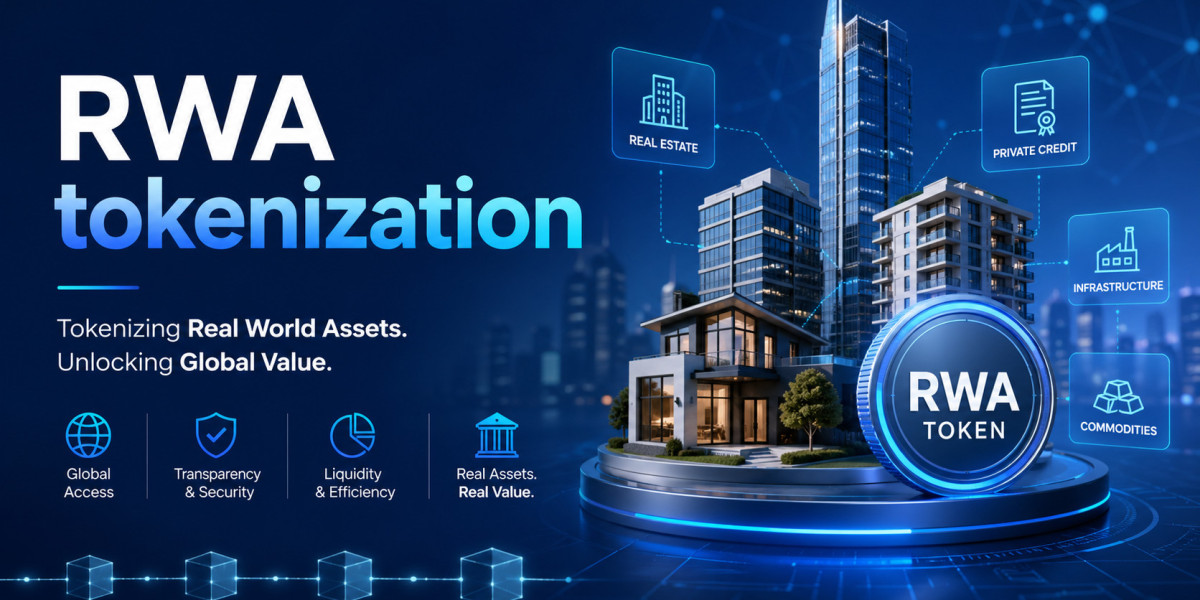
Real World Asset tokenization refers to the process of representing ownership rights or economic value of physical or traditional financial assets as digital tokens on a blockchain. Each token represents a fraction of the underlying asset or its cash flow rights.
These tokens can represent a wide range of assets, including:
- Real estate properties
- Government bonds and private debt
- Commodities such as gold or oil
- Infrastructure projects
- Private equity holdings
- Intellectual property and revenue streams
Once tokenized, these assets can be traded on blockchain-based platforms, enabling fractional ownership and programmable transfer mechanisms. The core innovation lies in converting traditionally static and illiquid assets into digital units that behave more like financial instruments.
Why Traditional Markets Struggle with Liquidity
Before understanding how real world asset tokenization improves liquidity, it is important to examine why traditional markets struggle in the first place.
1. High Entry Barriers
Many real-world assets require large capital investments. For example, real estate or infrastructure projects often require significant upfront funding, limiting participation to institutional investors.
2. Fragmented Ownership Structures
Ownership of physical assets is often complex and legally fragmented. This makes transfer processes slow and difficult to execute.
3. Limited Secondary Markets
Many real-world assets do not have active secondary markets. Selling a property, private equity stake, or infrastructure investment can take months or even years.
4. High Transaction Costs
Legal fees, brokerage commissions, and administrative costs reduce the efficiency of trading real-world assets.
5. Geographic and Regulatory Constraints
Cross-border trading of physical assets is restricted by jurisdictional laws, compliance requirements, and regulatory frameworks. These limitations collectively reduce liquidity and prevent efficient capital movement.
How RWA Tokenization Improves Market Liquidity
1. Fractional Ownership Expands the Investor Base
One of the most significant ways tokenization increases liquidity is through fractional ownership. Instead of requiring investors to purchase an entire asset, tokenization divides assets into smaller digital units. For example, a commercial property worth millions can be divided into thousands of tokens, each representing a small percentage of ownership. This lowers the financial barrier to entry and allows a much larger pool of investors to participate. When more participants can buy and sell an asset, liquidity naturally increases. A broader investor base also means more frequent transactions, which improves market depth and trading activity.
2. Enables Continuous Trading Through Digital Markets
Traditional real-world assets are often traded in episodic cycles. For example, real estate transactions occur only when a buyer and seller negotiate a deal, often through intermediaries. Tokenized assets, however, can be traded continuously on blockchain-based marketplaces. These digital platforms function similarly to financial exchanges, where buyers and sellers interact in real time. This continuous trading environment significantly improves liquidity because assets are no longer locked into long transaction cycles.
3. Reduces Settlement Time to Near-Instant Execution
In traditional financial systems, asset settlement can take days or even weeks due to banking processes, legal documentation, and intermediary verification. Tokenization enables near-instant settlement through smart contracts. Once a trade is executed, ownership is automatically transferred on the blockchain without manual intervention. Faster settlement cycles reduce capital lock-up periods and encourage more frequent trading activity, thereby increasing liquidity efficiency.
4. Standardizes Asset Representation
One of the challenges in traditional markets is the lack of standardization. Every asset can have unique legal structures, ownership conditions, and documentation requirements. Tokenization standardizes assets into digital tokens with uniform characteristics. This makes them easier to understand, price, and trade. Standardization improves market efficiency because investors can evaluate assets more quickly and make faster trading decisions, which enhances liquidity.
5. Introduces Global Market Accessibility
Traditional asset markets are often restricted by geography and regulatory boundaries. For example, investing in foreign real estate or private equity funds can be complex due to legal restrictions. Tokenized assets can be accessed by global investors through blockchain networks. This removes geographic limitations and expands the potential market size significantly. A larger global investor pool leads to higher demand and supply activity, which directly improves liquidity.
6. Enables 24/7 Trading Without Market Closure
Traditional financial markets operate within fixed hours and are subject to regional holidays and closures. Blockchain-based token markets operate continuously, 24/7, without downtime. Investors can trade assets at any time, regardless of time zones or market schedules. This constant availability increases trading frequency and ensures that liquidity is not restricted by operational hours.
7. Reduces Dependency on Intermediaries
In traditional asset markets, transactions involve multiple intermediaries such as brokers, custodians, legal advisors, and clearing houses. These intermediaries add time, cost, and complexity to the transaction process. Tokenization reduces dependency on intermediaries by using smart contracts to automate ownership transfers, compliance checks, and settlement processes. Lower friction in transactions encourages more participation and increases market liquidity.
8. Improves Price Discovery Mechanisms
Liquidity is closely tied to accurate price discovery. In illiquid markets, asset prices are often estimated rather than determined by active trading. Tokenized markets introduce more frequent trading activity, which generates real-time pricing data based on supply and demand dynamics. Improved price transparency helps investors make faster decisions and increases confidence in trading, further enhancing liquidity.
9. Enables Secondary Market Development
Many real-world assets lack efficient secondary markets, making it difficult for investors to exit positions. Tokenization creates digital secondary markets where assets can be traded after initial issuance. These markets function similarly to stock exchanges but for real-world assets. The existence of secondary markets ensures that investors have exit options, which is a key factor in improving liquidity.
10. Allows Programmable Liquidity Through Smart Contracts
Smart contracts enable programmable financial logic within tokenized assets. This means liquidity rules can be embedded directly into the asset structure.
For example:
- Lock-up periods can be enforced automatically
- Dividend distributions can be scheduled
- Buy-back mechanisms can be programmed
- Liquidity pools can be integrated
This programmability ensures that liquidity is not just market-driven but also structurally supported by the asset design itself.
11. Attracts Institutional and Retail Investors Simultaneously
Traditional real-world assets often cater to either institutional or retail investors, but rarely both efficiently. Tokenization bridges this gap by enabling fractional participation while maintaining institutional-grade structure and transparency. When both retail and institutional investors participate in the same ecosystem, trading volume increases, leading to improved liquidity.
12. Enhances Asset Portability Across Platforms
Tokenized assets exist on blockchain networks, making them portable across different platforms and marketplaces. This interoperability allows assets to move between exchanges and liquidity pools, increasing trading opportunities and market depth. Greater portability ensures that assets are not confined to a single marketplace, improving liquidity distribution.
13. Encourages Capital Efficiency in Illiquid Markets
In traditional markets, capital is often locked into long-term investments with limited exit options. Tokenization unlocks capital efficiency by allowing investors to exit positions partially or fully at any time through token trading. This flexibility increases willingness to invest in previously illiquid asset classes, expanding market participation and liquidity flow.
Broader Economic Impact of Improved Liquidity
The liquidity improvements introduced by RWA tokenization have wider implications for financial systems:
- More efficient allocation of global capital
- Increased participation in traditionally inaccessible markets
- Reduced cost of capital for asset issuers
- Expansion of digital asset-based financial ecosystems
- Greater integration between traditional finance and blockchain systems
Over time, this could reshape how global markets function by reducing friction in asset movement.
Challenges to Liquidity Optimization
Despite its advantages, RWA tokenization faces certain challenges:
- Regulatory uncertainty across jurisdictions
- Lack of standardized token frameworks
- Limited institutional adoption in some regions
- Market fragmentation across blockchain platforms
- Security and custody considerations
These challenges must be addressed to fully unlock liquidity potential at scale.
Conclusion
Real World Asset tokenization significantly improves market liquidity by transforming traditionally illiquid assets into divisible, tradable, and globally accessible digital instruments. Through fractional ownership, continuous trading, faster settlement, and global participation, tokenization removes many of the structural barriers that limit liquidity in conventional markets. By enabling programmable, transparent, and interoperable asset systems, tokenization creates a more efficient financial environment where capital can move freely and assets can be traded with greater ease. As adoption increases, RWA tokenization is expected to become a foundational mechanism for modern financial markets, bridging the gap between physical assets and digital liquidity ecosystems.