
When you study embryology or whichever topic, be it anatomy, physio, biochem, what I prefer is when you read one chapter, try to focus on two or three figures which you can draw for the exam whenever one topic from that chapter is asked and you please draw and study those figures so that when you are asked one single topic from that chapter, you can very easily draw this figure. So that is first and foremost point, especially for embryology without figures, you cannot fetch marks.
So, whenever you take one chapter, concentrate on two or three figures which you can easily draw whenever one topic is asked from that chapter. That point you have to keep in mind. The next thing is select those topics, those figures which you can easily grasp like flowcharts or some figures will be having the narrated sequences.
So, if you happen to study those figures just the day before exam, you can just flip through those images which will help you to get the entire content in a nutshell. So, you have to study those figures also because you know the day before exam, you won't be getting time to read the entire book. Okay, so these two points you have to keep in mind. If you are enrolled in an Embryology Course in Bangalore, this structured, chapter-wise approach will help you prepare more effectively. So, let's see chapter wise which are the topics which you need to go through while preparing for the exam.
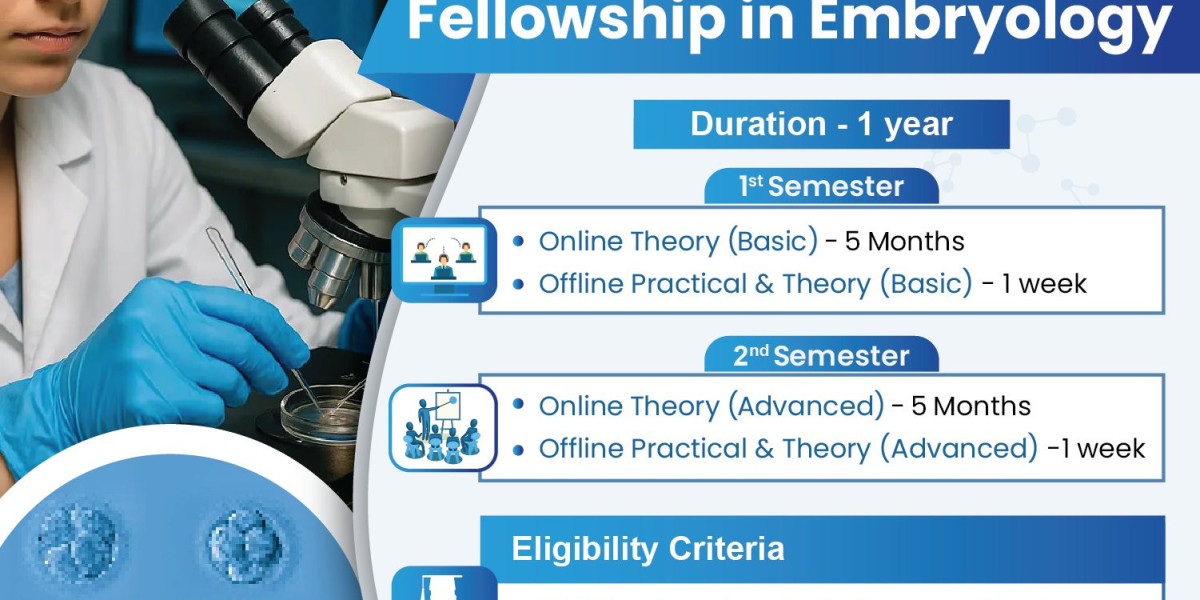
Medline Academics offers a structured and clinically oriented approach to embryology training in Bangalore, helping students connect basic concepts with practical application. Their teaching focuses on diagram-based understanding, which is essential for scoring well in exams. With experienced faculty and a well-designed curriculum, students are guided through important topics in a simplified and exam-focused manner. The program also emphasises areas like Assisted Reproductive Technology and clinical correlations, making it useful for those interested in reproductive medicine. For students looking for an Embryology Course in Bangalore, Medline Academics provides a comprehensive learning experience.
When you consider gametogenesis, you have to definitely learn about oogenesis and spermatogenesis. Oogenesis when you study, you need to know the different maturation phases of the ovarian follicles and then you have to know how to draw a graphene follicle. Now when you talk about spermatogenesis, you need to know about spermatogenesis proper and spermiogenesis. Then the next important point you need to know is the parts of sperms and which are the cellular structures, cellular organelles from which the parts of sperms are derived.
That point also you have to remember. Now coming to the female reproductive cycle, the competency which is expected from that chapter is you need to describe the uterine changes occurring in the menstrual cycle as well as the synchrony between the ovarian and uterine cycle. So, if you get a single diagram where it is depicted entirely like this, you will be getting the uterine cycle features as well as the ovarian cycle features and the hormonal levels.
If you just read it thoroughly, then it will be easy for you to just go through it before the exam. So, the synchrony between the ovarian and uterine cycle and the different levels of hormones, the FSH, LH, oestrogen, progesterone, all these things you need to know. Then important thing which you have to know is the efficiency of contraception and the different methods of contraception.
What are the different methods and what is the anatomical theory behind those methods?
You have to know that. Then when you come to fertilisation, you need to know the different steps in fertilisation like transport of gametes, fusion of gametes and results of fertilisation. You need to know those three points in detail.
Then sometimes short notes might be asked regarding capacitation, ecrosome reaction, you need to know that. Sometimes short note will be asked to write about zona pellucida because you know it is a very important structure. Then one important point which you have to study in that is Assisted Reproductive Technology, ART.
Dr. Kamini Rao Hospitals is known for its strong clinical foundation in reproductive medicine and embryology, offering students exposure to real-world applications of theoretical concepts. With a focus on evidence-based practice, the institution helps learners understand topics like fertilisation, implantation, and Assisted Reproductive Technology in a practical setting. The integration of clinical training in this IVF hospital in Bangalore with academic learning makes it easier for students to connect embryology with patient care. This approach is particularly beneficial for those who want to pursue a career in fertility and reproductive sciences. It also provides valuable insight for anyone considering advanced embryology training.
There is a short form. Sometimes the question will be just ART. You will not be knowing the expansion. So Assisted Reproductive Technology which includes different methods both for male infertility as well as female infertility. You have to know that.
Then coming to the first week of development. All these things, most of the topics I have covered in my channel. Please go through it if you want to have a detailed version. When you come to the first week of development, you have to know what are the changes occurring in the first week in a nutshell plus you need to know more about cleavage division, formation of morela. Morela itself is a short note. Blastocyst itself is a short note.
So, implantation. So, all these three, all these important topics you need to know with a diagram related to each. And one more important point here is ectopic pregnancy.
You have to say the different types of ectopic pregnancy and something about placenta previa. These are the topics which are expected from this chapter.
Coming to the second week of development, you need to know again which are the events occurring in a nutshell.
Then changes happening for the trophoblast. Changes happening for the endometrium, the decidual reaction. Decidual reaction, all are favourite questions.
So, the decidual reaction you have to know because the endometrium is getting differentiated as deciduobasalis, capsularis and parietalis. You need to know in detail plus about something about high diatodeform mole or the molar pregnancy. You have to know what are the different types of high diatodeform mole and the anatomical principle behind it.
Coming to the third week of development, the main question from this chapter is gastrulation. Then primitive streak. This is one of the favourite questions.
You have to talk about primitive streak, the functions of primitive streak, the fate of primitive streak. Then another important topic from this chapter is notochord. Notochord, the formation of notochord, the fate of notochord.
Then one more important topic from this chapter is allantoic diverticulum. All these three topics, the primitive streak, notochord and allantoic diverticulum. Whenever these things are asked, you should be able to write a short note about it.
Then coming to the next chapter from 4th to 8th week of development. In this comes the intraembryonic mesoderm. It is very favourite.
The derivatives of intraembryonic mesoderm has been asked many number of times. Then folding of embryo, you need to know about it, but not that in detail as far as undergraduate is concerned. But you need to know in detail about neural crest cells, neural ectoderm and neural crest cell derivatives that is always asked.
Sometimes you will be asked to write derivatives of ectoderm, derivatives of entoderm, derivatives of mesoderm like that you might get a question or derivative of germ layers that will be a single question where you have to write about derivatives of ectoderm, entoderm and mesoderm. So, if you happen to just study some figures like this, it will be easy for you to just flip through the diagram the day before. So that if you just happen to see this diagram, many point, many number of points will come into your mind.
Then coming to third month to birth, what are the things you expect from third month to birth? In this you have to read about chorionic villus sampling, amniocentesis, then something about foetal blood sampling, pre-implantation genetic diagnosis. Okay so all these things can be asked as a short note from third month to birth. Coming to the development of gut tubes, development of gut tubes as a result of lateral folding we know that there is formation of anterior abdominal wall and there will be development of gut tube.
So primitive gut tube can be asked as a short note and derivatives of gut tube the foregut, the midgut, the hindgut and its derivatives. Then the arterial supply of gut tube it will be asked, then rotation of gut all these are very important points you need to know. Then development of mesenteries, then development of duodenum, all these are in favourite questions.
Development of diaphragm again one important topic from this chapter. So, development of gut tubes you have to know the derivatives of gut tubes, then blood supply of gut tube, the rotation of gut tube, development of mesentery, development of duodenum. In this chapter apart from development of diaphragm, one of the applied aspects which you have to know is continental diaphragmatic hernia, then you need to know about omphalocele.
Omphalocele can also be asked as a short note. Then the next chapter is placenta and umbilical cord. Now placenta is again a very favourite question for most of the examiners.
You need to know about the structure of placenta, the different plates of placenta, the basal plate, the chorionic plate you need to know more about it. Then the development of placenta, the primary villus, secondary villus, tertiary villus, how it becomes mature, then the circulation of placenta you need to know. Then about the placental barrier, again a very favourite question for most of the exams.
Then the next thing is foetal membranes, again a very favourite short note. So foetal membrane you have to know. Then umbilical cord, what are the contents of the umbilical cord, structure of umbilical cord, likewise you will get a question.
Now when you talk about placenta, you have to say about the classification of placenta according to shape, according to the insertion of umbilical cord, according to the degree of penetration, then only when you write a short note on placenta it will be complete. Then about twinning, twinning we know that there are mainly two types of twinning, disygotic twin and monosygotic twin. You need to know the principle behind these two types of twinning.
So, if you just happen to study one diagram or one figure like this, it will be easy for you to just go through the topic very quickly. Then about conjoined twins, you have to know because sometimes the short note can be asked about conjoined twins.
Now the next chapter is pharyngeal apparatus or brachial apparatus. Any number of questions can come because this is one of the favourite chapter for most of the examiners because we have the arches, pharyngeal arches and its derivative. Sometimes you will be asked to write the derivatives of first arch, derivatives of second arch. Out of the five arches, usually the questions will be confined to the first and second arch because you have many numbers of derivatives from these two arches.
So first and second arch derivatives in detail you need to know. Then something about the thyroglossal duct and fate of thyroglossal duct. Then the development of tongue, again the development of tongue and its clinical correlation with the nerve supply.
That is very favourite question that also you have to know in detail. Now coming to the cardiovascular system, cardiovascular system, the questions which you can expect is the primordial heart and the primordial heart tube and the subdivisions of the primordial heart tube. Then you can expect questions regarding the primitive atrium, the formation of primitive atrium, primitive ventricle, interatrial septum, interventricular septum.
Then you can expect questions regarding aortic arches, arch arteries. Okay. Then foetal circulation is a very important topic.
Foetal circulation you need to know how to draw the diagram of foetal circulation. Some schematic diagram will do. Then changes happening after birth in a foetal circulation and what are the remnants.
That you have to know. So, when you just study one diagram where the heart tube is subdivided, that will help you to have a quick glance of the topic. Then again, the aortic arches, if you just study one diagram, then foetal circulation, all these if you just study with the help of a diagram, it will be easy for you to keep all these points in your mind.
Then coming to the respiratory system, respiratory system, you have to know the development of lung as the functional stages of lung, the glandular stage, the canalicular stage, the alveolar stage. So all these stages, all these four stages of maturation of lungs, you have to know all the four stages. And one more important point in this chapter is the tracheoesophageal fistula.
So if you happen to study this diagram, then it will be easy for you to draw as well as to say the different types of tracheoesophageal fistula. Then coming to the digestive system, digestive system, you need to know about the development of liver and biliary apparatus, development of pancreas, again a very favourite short note, development of pancreas as well as sometimes it will be asked to write a short note on development of pancreatic duct alone. Then you have to talk about midgut loop, the rotation of midgut.
Then development of cecum, again a favourite question. Then the partitioning of cloaca, development of anal canal, all these are favourite questions. So among this liver and extrapartic biliary apparatus, development of pancreas, these two are repeatedly asked many number of times.
Then coming to the renal system, renal system, urogenital system, you need to know about the development of kidney, the development of urinary bladder because there is a difference for the development of trigonal bladder. So development of kidney as well as development of urinary bladder, you need to know in detail. Now development of gonads, you have to know the development of both testis and ovary and the derivatives of genital ducts.
You know that there are mesonephric duct and paramesonephric duct, you need to know the derivatives of each. Then another short note which is asked from this chapter is descent of testis, you have to know that in detail. Now coming to the development of uterus and vagina, you need to know the development as well as developmental anomalies.
Now coming to the development of face, you need to know the important processes like frontonasal, maxillary, mandibular process. Then the development of palate, so the development of face and development of palate, these are the two important.
So if you happen to study one diagram like this, it will be easy for you to say the derivatives of the different processes which are contributing to the formation of face. Likewise, if you happen to study this diagram, it will be easy for you to know the derivatives of palate. So derivative of development of face as well as development of palate and the cleft palate, again one favourite question.
Coming to the central nervous system, you need to know about neurulation and fate of neural crest cells. So what do you mean by neurulation? The process you need to know, then neural crest cells you need to know, neuropores, the anterior and posterior neuropore and the anomalies associated with it like anencephaly, spina bifida. So these are the important topics from central nervous system and also you have to know what are the brain vesicles and what are the derivatives of the brain vesicles.
So if you happen to study that also, it will be easy for you. Then the details about prosencephalon, mesencephalon, romencephalon, all those things for undergraduate level, it's not that important, but still you have to know what are the derivatives of the brain vesicles. Then one important point you have to remember is the development of pituitary gland.
Pituitary gland is again a favourite question. Along with that you need to study about the development of suprarenal gland as well because all this has got some peculiarities. I have done all these sessions in my channel, please go through it.
Now development of eye, again it's not that often asked when you compare with the rest of the topics, but still you can study the development of eye in the form of development of lens vesicle, development of optic stalk. So if you happen to study these two diagrams, at least you can write a very beautiful short note. So development of eye, at least those points, the lens vesicle as well as the development of retina.
These two topics you need to know from that chapter, but usually compared to the rest of the topics it is rarely asked, but that doesn't mean that you need not study. Likewise, development of ear also, it's not that important compared to the remaining chapters, but still the development of ear, when you studied about the pharyngeal apparatus, we are studying some amount from that chapter itself, but still the development of pinna, you can just study with the help of this diagram, that is it is developed from the auricular hillocks and the development of external ear, middle ear and inner ear. At least you try to remember the sources rather than going into the details of the development of inner ear and all.
For your undergraduate level, the details are not needed, but still you need to know about what are the origin of development of the pinna, the development of external ear, middle ear and internal ear. That point you have to keep in mind. Then coming to integumentary system, development of mammary glands can be asked compared to the rest of the topics.
So from the integumentary system you can read that topic. Then coming to the skeletal system, again it's not that asked compared to the rest of the topics, but still the development of sternum you can study. Then coming to the muscular system, you have to say the details of somites, you will get a short one, that is when you study intramuscular mesoderm, you would have already studied, but when you are asked about muscular system, you can write something from the somites.
Then teratology, the teratogenic effects, the classification of teratogenic effects under drugs, chemicals, radiations. For completion sake, again the teratogenic factors, sometimes which are the teratogenic factors under the heading chemicals or under the heading drugs. Sometimes some questions you might come across, but still when you compare this chapter with the rest of the chapters, it's not that important, but still if you have an idea, like you just study two examples from each factor, like two drugs, two chemicals, two radiation factors, two hormones, two infections, if you happen to learn it like that, then it will be easy for you when something is asked from the chapter teratology, because you need not omit that question, you can attempt that question.
So that's from the chapter teratology. So all these questions can be asked for the exam. And one important point is you should not leave any question unattempted.
You have to write something for each and every question. And as soon as you see one question, don't think like you don't know that. You just spend five minutes thinking about that topic and you will get some links or some factors connected to that topic so that you can build on it. So never ever leave any question unattempted. So these are some of the important topics from embryology.